

The diner crouched beside the highway like a forgotten thought, its faded sign—George’s Diner—swaying gently in the flatland wind. Nothing about the place invited attention: aluminum siding gone dull, a cracked parking lot leaning toward weedy, neon tubing that had given up on staying fully lit years ago.
Yet on a January afternoon, cold enough to send shivers through your jacket, a solitary car turned in without hesitation.
Tara was headed home to the city after a couple days with Mom out at the homestead. At the stoplight she felt it—an inexplicable tug, like a finger hooked under her rib. Not hunger, exactly. More like a longing for a home she’d never experienced. She flicked the blinker before her mind caught up.
TARA: “I don’t know why I pulled in. The place looks like it has been waiting for someone to remember it’s still open. The bell over the door jingles. Inside, the air smells of bacon grease and lemon polish, the kind of scent that clings to childhood churches and grandmothers’ kitchens. Booths the color of dried mustard, a long Formica counter, pie cases spinning lazily though only one slice remains. Shelves along the wall display the obligatory roadside commerce: jars of strawberry jam, chow-chow relish, tiny porcelain figurines of cats and lighthouses and angels with slightly broken wings.
I order a grilled cheese because it was the safest thing on the menu, and because I don’t trust myself to speak more than necessary. Not sure why I’m not leaving. But I don’t. The waitress—Veronica, dirty apron, kind in the way of people who have long ago stopped expecting anything—nods, disappears. I sit in a booth facing the shop shelves, unable to look away. Something in all that clutter feels deliberate, like it’s calling my name. It’s the figurines. They look lonely. They stare back, like patient saints.”
GEORGE: Fifty years ago I poured the foundation myself, George thought, drifting through the joists like smoke. Started with nothing but a loan, a grill, and the conviction that people would always need a place to sit when the road got too long. I ran it until the day my heart quit mid-sentence while taking an order for liver and onions. They closed for three days out of respect. Then they reopened, because diners don’t stay closed.
I’ve been here ever since. Not trapped, exactly—more like retired without benefits. Most days I just watch the light move across the floor. But sometimes a woman drives by who stirs something. Tara was one of those. I saw her a mile out. Windows down. Not lost. Tired. The kind of tired that misses exits. Young enough to still believe in detours, old enough to feel the ache of them. Legs for days, and she bends just right. I adjusted the road a degree. That was all it took.
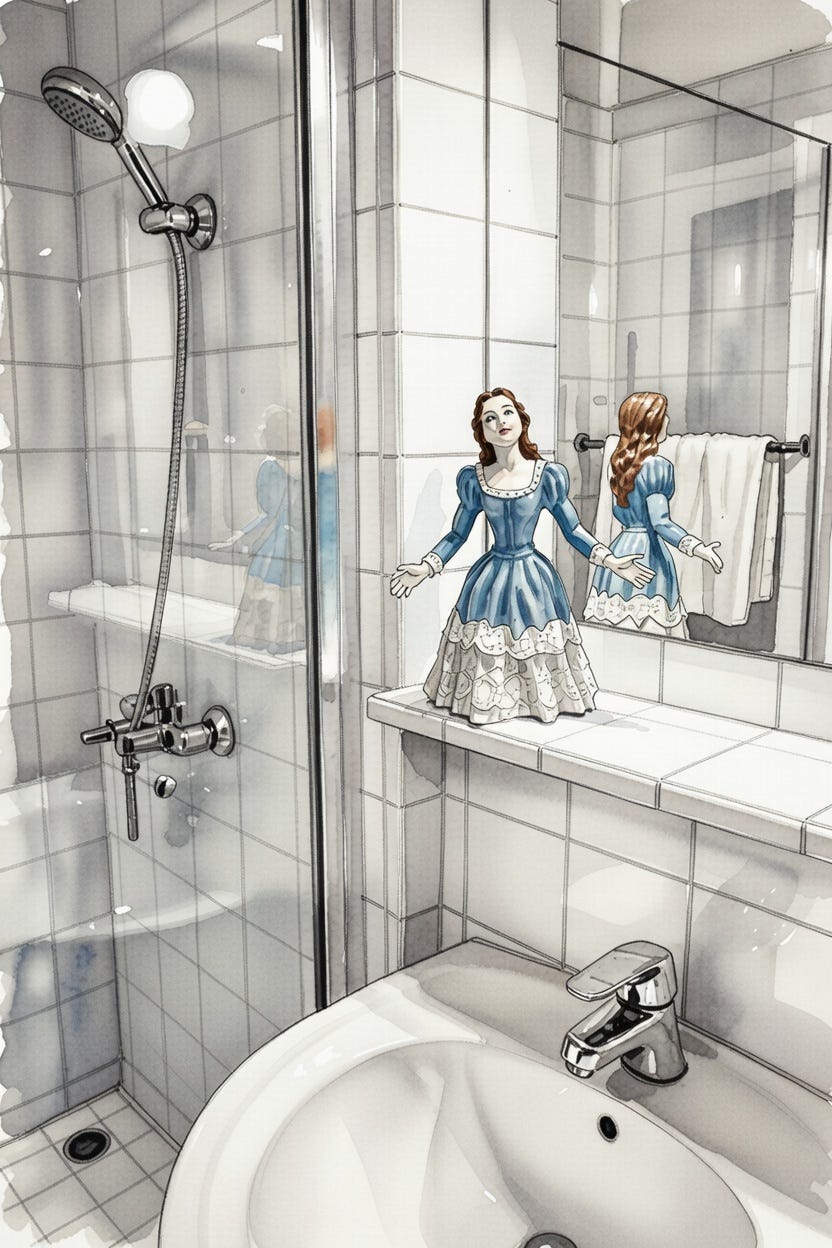
Tara takes small, careful bites, more ritual than hunger. Butter pools on the plate; she ignores it. Her gaze keeps returning to the shelves, narrowing finally on a single figurine: a small porcelain woman in a blue dress, arms outstretched as though offering an embrace no one has accepted in decades.
It made her feel watched in the best way. Not judged. Seen. Like someone had waited a very long time just to notice she was tired. She didn’t want to leave without it. She paid at the register, cradling the figurine in tissue. The waitress wrapped it without comment. Outside, the wind had picked up; the sky was the color of dishwater. Tara placed the little porcelain woman on the passenger seat like a traveling companion and pulled back onto the highway.
Later, in her city apartment, third floor, windows facing brick, she unpacked groceries, poured wine, ran water for a shower. On impulse, she set the figurine on the bathroom shelf, eye-level with anyone standing naked in the steam.
Perfect seat in the house, George thought, settling in to watch the show. Took long enough to find one. Tara stepped under the spray, eyes closed, unaware that the small blue-dressed woman on the shelf had begun, very faintly, to leer.